WEEK 6 PRACTITIONERS FOR ELINCHROM STUDIO LIGHTING, SOFT BOXES
 |
| Photograph of fruit with (top) and without (bottom) soft box lighting |
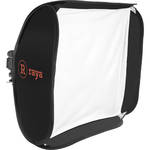
A Soft box is a type of photographic lighting device, one of a number of photographic soft light devices. All the various soft light types create even and diffused light[1] by directing light through some diffusing material, or by "bouncing" light off a second surface to diffuse the light. The best known form of bouncing source is the umbrella light where the light from the bulb is bounced off the inside of a metalized umbrella to create a soft indirect light.
TINA BARNEY
 |
| This looks like one of my photographs of Stephanie, the lighting looks like the gold reflector we used in class. But there is a shadow on her cheek |
Barney was introduced to photography by her grandfather when she was a child. As a teenager, she studied Art History at Spence School in Manhattan, and at the age of 19, she lived in Italy for a time where she was able to further study art.[2] It was not until 1973, when she moved to Sun Valley, Idaho, with her husband and children, that she began to train in photography.[3] While in Idaho, she studied at the Sun Valley Center for Arts and Humanities in Ketchum, from 1976 to 1979.[4] Additionally, she has completed workshops with Frederick Sommer, Roger Mertin, Joyce Niemanas, Duane Michals, Nathan Lyons, John Pfahl, and Robert Cumming.[4]Barney is most well known for creating large format, colorful photographs of her wealthy, East Coast family. The images straddle the line between candid and tableau
 |
 |
| Look at the colours, the pretty setting and beautfiful lighting |
Barney’s photographs expose the emotional and psychological currents that course just beneath the surfaces of perfect trappings and banal gestures. In Jill and Polly in the Bathroom, such tension is evident in Jill’s strained expression, Polly’s turn away from Jill, and the distance between them that persists even in the cramped quarters of such a small room. Barney notes, “When people say that there is a distance, a stiffness in my photographs, that the people look like they do not connect, my answer is, that this is the best we can do. This inability to show physical affection is in our heritage.” While the myth that material comfort ensures personal contentment is an alluring one, Barney’s photographs undermine such illusions, even in later images in which the focus has shifted away from context to the personality and face of the sitter. In these more recent photographs of family and friends—many of which eliminate her directorial approach and allow for more self-presentation to the camera—Barney continues to make photographs distinct from family snapshots or formal group portraits in their refusal to serve as predictable commemorations of happy times, important gatherings, and ritualized affection.
''''''''''''''''''''''''''''''''''''''''''''''''''''''''''''''''''''''''''''''''''''''''''''''''''''''''''''''''''''''''''''''''''''''''''''''''''''''''''''''''''''''''''''''''''''''''''''''''''''''''''''''''''''''''''''''''''''''''''''''''''''
2 Practitioner..
| Cindy Sherman | |
|---|---|
| Born | Cynthia Morris Sherman January 19, 1954 Glen Ridge, New Jersey, U.S. |
| Nationality | American |
| Education | Buffalo State College |
| Known for | Photography |
| Notable work | Untitled #96, Untitled #153, Complete Untitled Film Stills, 1977–1980 |
| Spouse(s) | Michel Auder (1984–1999; divorced) |
| Awards | |
 |
| Cindy |
.jpg "Untitled Lucille Ball by Cindy Sherman") |
| Lucille Ball . Cindy does an amazing job with her lighting. Lucille face looks so smooth and gentle. |
 |
| I think this is a brilliant photograph the framing the lighting on the model is great; |
 |
 |
| This is a groovey back drop the lighting is perfect theres no shadow |
 |
| This looks similar to the Rembrandt images |
A little note on Elinchrom lights.
 |

tethered shooting
Tethered shooting is connecting a computer to the camera when you shoot so the pictures you take a downloaded to the computer rather than (or in addition) to a memory card.
Usually, the camera and computer are connected by cable, hence tethering.
In this tutorial, I am going to go over tethered shooting, why (or when) you should shoot tethered, how it is done and what is the gear involved.

WHY TETHER SHOOT
You would probably wanna shoot tethered for the speed at which you ca n get the files onto a computer. Why would you want to do that? I can think of at least several reasons: The first of which is quickly watching the raw photographs on the computer. This means that you, the photographer, are not the only person on set and have a supervising art director, client, or other stake holders, you don’t need to interrupt the session to download images into a computer or get a huddle-up behind your back to watch your LCD. They can watch the images immediately on a big comfortable screen.
This also allows you to perform quick or verifications on the photographs you shoot (focus, exposure and so on…). Sometimes this can really ease up your workflow. for example when you are doing a composite shoot, you can stack the images and make sure everything is properly placed and ready for editing.
Lastly, this means that your files can be auto backed-up while you shoot. You have at least one level of redundancy (memory card + computer), but you can also use a raid, a portable drive or any other configuration that makes you feel good about file safety.
photography.[2]


No comments:
Post a Comment